
Different Names, Same Story

Introduction: The First Account
Long ago, ancient cultures believed divine wisdom flowed from gods or spirits, whispering truths that echo in modern spirituality’s quest for eternal life, free from cycles of suffering and dissatisfaction here on earth. Stories of human creation, molded from earth and imbued with divine essence, resonate across traditions—Prometheus shaping clay with Athena’s breath in Greek myth, Nuwa and Fuxi breathing life into clay figures in Chinese lore, and the Hebrew Bible’s account of Elohim crafting humans animated by YHWH’s breath (Genesis 2:7). The creation of humanity and hints of our destiny transcend the biblical narrative, forming a story shared worldwide. These tales, though separated by region and time, share a universal theme: humanity bears a divine image, charged with a destiny inscribed like a name.
In the Enuma Elish, the universe emerges from chaos, giving birth to various deities from the primordial waters; Apsu (fresh water) and Tiamat (salt water). Upon the creation process, their vast movements and commingling disturbs the harmony desired by Apsu. Leading his actions with anger, he set out with the intent to kill all of the new younger and lower deities. To prevent this, Ea (Enki), a wise and benevolent trickster, slays Apsu.
Enki’s subversive wisdom parallels Prometheus in Greek myth and the serpent in Genesis 3, each challenging divine authority to empower humans with insight. The serpent’s “craftiness” mirrors Enki’s epithet as ushumgal (“great serpent”), a trickster outwitting higher gods for humanity’s benefit, reflecting a polemic in Genesis that recasts this heroic benefactor as a deceiver.
The War of Heaven & The Tablet of Destiny
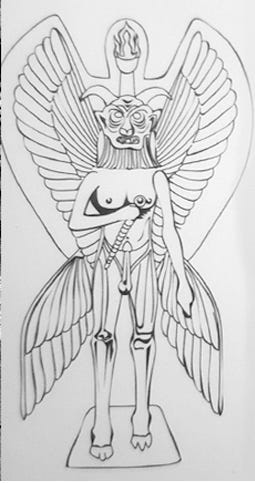
Among the earliest records, the Mesopotamian Enuma Elish (ca. 12th century BCE) begins with a cosmic war over the Tablets of Destiny, an artifacts granting supreme authority to fix the fates of gods and mortals. This epic, etched on seven clay tablets, sets the stage for humanity’s role in divine order, a motif mirrored in later myths worldwide.
Enki, the wise offspring of sky god Anu and earth goddess Ki (Anunnaki), enrages Tiamat by slaying Apsu. Tiamat grants the Tablets of Destiny to her next consort Kingu, leader of her monstrous army. Marduk, Enki’s son, defeats Tiamat, splitting her body in two to form heaven and earth, and captures Kingu. Found guilty of instigating war, Kingu is executed, and Enki mixes his blood with clay to create humans (lullu), tasked with serving the gods to ensure their repose (Tablet VI; Dalley, 2000). This act allows the gods, particularly the Anunnaki, to rest, their labor transferred to humanity. Marduk’s victory is celebrated on earth with a shrine, possibly the Etemenanki, a ziggurat some link to the biblical Tower of Babel, symbolizing humanity’s reach for divine purpose. As reflecting a destiny that bridges heaven and earth, we read in the Hermetic Poimandres:
“None of the heavenly gods will go down to earth, leaving the bounds of heaven, yet the human being rises up to heaven and takes its measure, and knows what is in its height and its depth, and, understanding all things exactly, comes to be on high without leaving earth behind—so enormous is his range.” (IN.24–25; Copenhaver, 1992),
The Great Reset of the Deluge
This heavenly-earthly mirroring, akin to the Hermetic principle “as above, so below,” shapes the flood narrative in the Akkadian Atrahasis (ca. 18th century BCE), an older tale echoed in Enuma Elish. As humans multiply, their noise disrupts Enlil’s divine order, prompting him to send plagues, famine, and a great flood. Enki, ever humanity’s ally, warns Atrahasis, who builds an ark to save his family along with animals, preserving life. The flood, a cosmic reset, reflects divine patterns manifesting on earth, shaping humanity’s destiny through cycles of chaos and restoration.
The story of the Flood was one of the most popular tales of ancient times, and is found in several ancient languages, reworked to suit different areas and cultures so that different settings and details are found in each version. Thereby the same character may be found with different names. Atrashsis’ name in the earliest Akkadian source was Uta-napisshtim, such as mentioned in the Gilgamesh Epic. It is a possibility that the abbreviation of (Uta)-na’ish(tim) was pronounced ‘Noah’ in Palestine from very early times.
The Day of Rest & Elevation of Humans
The Enuma Elish is preserved on seven tablets, with creation acts unfolding across them (e.g., humans created on Tablet VI, paralleling humans created on Day 6 in Genesis). Genesis explicitly divides creation into seven days, culminating in rest. In the Enuma Elish, gods achieve rest after the war and creation (humans are made to perform toil, allowing divine repose). Similarly, God's rest on Day 7 follows six days of creative "work," and humans are later commanded to emulate this cycle. The seven-day week in Genesis likely draws from Mesopotamian lunar phases, as described on Tablet V (Resplendent with horns to fix six days. On the Seventh day the crown will be half size). The Babylonian "shapattu" (rest days) fell on lunar dates like the 7th, 14th, 21st, and 28th, often involving rest or restrictions, which scholars link to the biblical Sabbath.
A New Destiny
Jesus declares, “The Sabbath was made for man, not man for the Sabbath” (Mark 2:27), challenging the Pharisees’ rigid legalism in a dispute over his disciples’ grain-plucking on the holy day (Mark 2:23–28). In Mesopotamian myths like Enuma Elish and Atrahasis, humans are crafted from divine blood to labor for the gods’ repose, enabling divine rest. Jesus reverses this paradigm with the verse above as the Sabbath serves human welfare, affirming humanity’s dignity as bearers of a divine image (Genesis 1:26), because we are meant to be partners in Divine purpose, not the powers of this world. He explained that if God’s kingdom were worldly, his followers would be like those who fight with politics or military force. Instead of vengeance and aversion, they are called to live by spiritual principles to demonstrate Christ's love and truth.
According to the Apocalypse of Adam, a Sethian Gnostic text from the Nag Hammadi library (ca. 1st–2nd century CE), reveals a secret recounting humanity’s origins, divine knowledge, and destiny. Adam tells Seth:
"Listen to my words, my son Seth. When God had created me out of the earth, along with Eve, your mother, I went about with her in a glory which she had seen in the aeon from which we had come forth. She taught me a word of knowledge of the eternal God. And we resembled the great eternal angels, for we were higher than the god who had created us and the powers with him, whom we did not know."
This divine spark elevates humans beyond their creator, a theme of transcendent destiny echoing the wisdom whispered by Enki, Prometheus, or the serpent. Here Adam claims that he and Eve were superior to the creator gods and his subordinate powers. This reflects the Sethian Gnostic belief that we humans carry a Divine Spark from the eternal, transcendent God, making us spiritually superior to the material worlds creator, who is malevolent and ignorant of the truth.
Human flaws—cowardice, anger, and imperfection—are the clay of our creation, shaped into a destiny imbued with the blood pumping through our heart. In the Sumerian Enki and Ninmah (ca. 3rd millennium BCE), gods craft humans from clay, some flawed, yet each given purpose, showing limitations as part of divine design (Lambert, 2013). Jesus states, that those who overcome their trials and tribulations of the world, He will give them a white stone with a new name, and no more shall we go out.
Struggles like temperance, loving our enemies, or doing our part to keep order may seem fundamentally insoluble. However, they become opportunities for discovery when we accept them and focus instead on what we can shape - our responses and attitude. This acceptance reveals our resilience and capacity for wisdom, turning flaws into gateways for self-discovery. Embracing them as tools for discovery, rather than burdens which can transform our flaws into the very map of our destiny.